
Ticks
Amblyomma americanum / Ixodes scapularis
Identification, behavior, health risks, prevention, and professional treatment options for Central Florida residents.
Overview
Central Florida hosts several medically important tick species that pose year-round health risks to humans and pets. The American dog tick (Dermacentor variabilis), lone star tick (Amblyomma americanum), and Gulf Coast tick (Amblyomma maculatum) are the most frequently encountered species. The black-legged tick (Ixodes scapularis), the primary Lyme disease vector in the Northeast and Midwest, also occurs in Florida. Florida's mild winters allow ticks to remain active year-round, with the lone star tick being a year-round nuisance across Central Florida. Ticks do not jump or fly — they quest by climbing to the tips of grass blades, leaf edges, and low vegetation and wait for a warm-blooded host to brush against them. Wooded neighborhoods, properties adjacent to natural areas, and homes with deer, raccoons, or other wildlife visitors typically have the highest tick pressure. Risk is directly tied to outdoor activity in vegetated environments, and pathogen transmission requires hours of tick attachment to a host.
Appearance
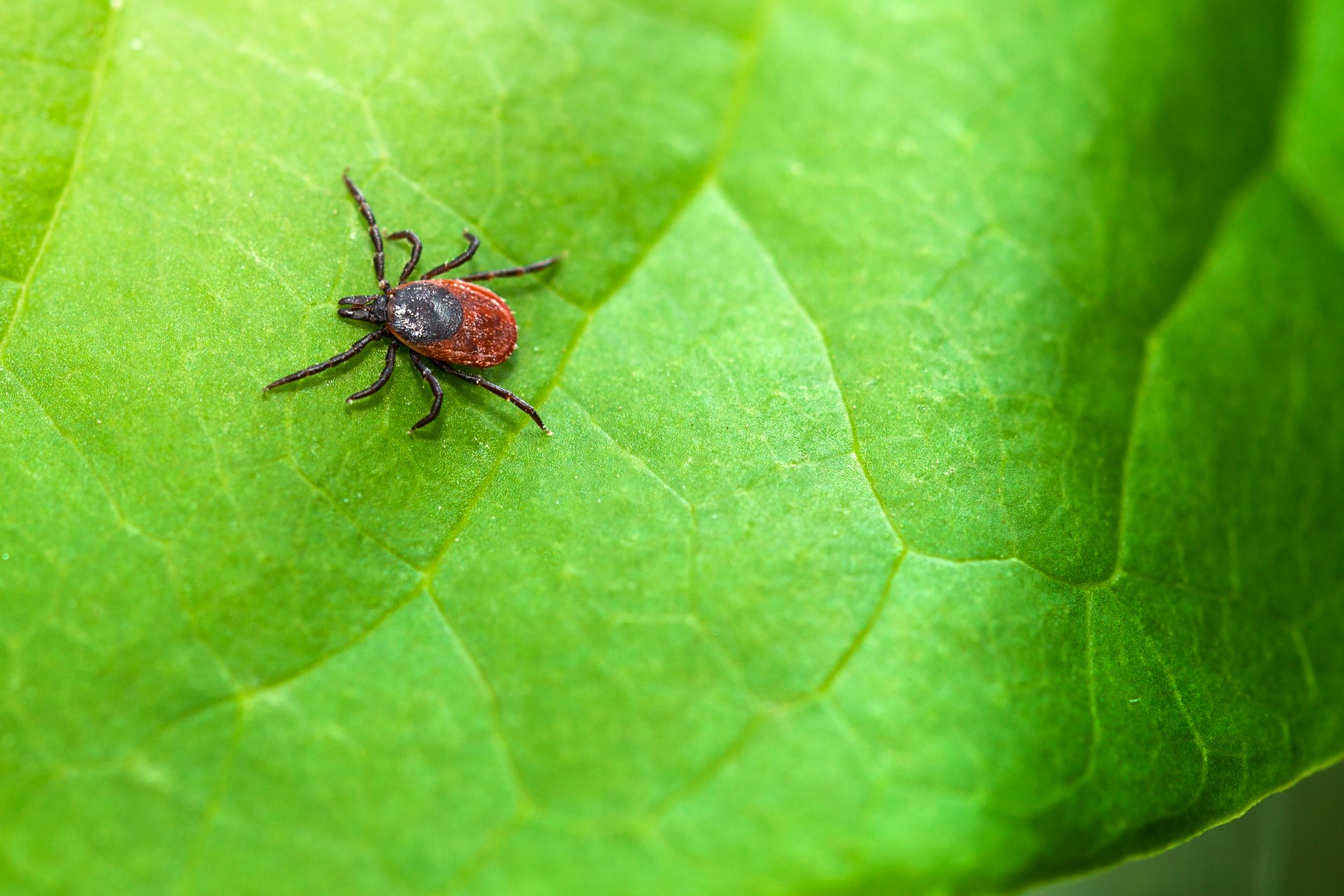
Adult lone star ticks are approximately 1/3 inch (unfed) with a single white dot on the back of the female. American dog ticks are similar in size, reddish-brown with white or gray mottled markings on the dorsal shield. Black-legged ticks are distinctively smaller — 1/8 inch unfed — and dark reddish-brown. Ticks are eight-legged arachnids (not insects) with no distinct head-thorax separation. All life stages (larva, nymph, adult) can bite and potentially transmit pathogens; nymphs are the most difficult to detect due to their very small size.
Behavior & Habits
Ticks attach to any passing warm-blooded host. After attachment, feeding takes from several hours to several days depending on species and life stage. Pathogen transmission for most tick-borne illnesses requires 24–48 hours of attached feeding, making prompt tick removal a meaningful mitigation tool. Ticks are most abundant in transition zones between mowed grass and woody vegetation — yard edges, trail margins, and areas with leaf litter.
Prevention
Maintain a mowed buffer zone between lawn and natural areas. Apply cedar or gravel mulch to create a barrier at woodland edges. Conduct full-body tick checks after outdoor activity, paying particular attention to the scalp, behind the ears, armpits, and groin. Keep pets on year-round veterinarian-recommended tick prevention. Wear light-colored clothing and apply DEET or permethrin to clothing and skin when in tick habitat.
Professional Treatment
Outdoor tick management uses residual acaricide treatments applied to lawn-to-vegetation transition zones, leaf litter areas, and shaded low-lying vegetation where ticks concentrate. Tick tubes containing permethrin-treated cotton — used by mice for nesting material — can be deployed to kill ticks on wildlife hosts in the yard. Landscape modifications reducing leaf litter and clearing brush complement chemical treatment. GreenCore Environmental provides outdoor tick control treatment for Central Florida yards. Call (866) 816-BUGS.
Why Professional Treatment Matters
Florida is home to four tick species that bite humans and pets: the American dog tick, black-legged tick (deer tick), lone star tick, and brown dog tick. Ticks in Florida are active year-round due to the mild climate, unlike northern states where tick activity slows in winter. Consumer yard sprays cover only treated surfaces — they do not address the leaf litter, brush margins, and wooded edges where questing ticks concentrate. Black-legged ticks in Florida can transmit Lyme disease, and all four species can transmit one or more pathogens including Rocky Mountain spotted fever, ehrlichiosis, and anaplasmosis. Tick populations in a yard are directly proportional to the presence of wildlife hosts — deer, raccoons, and feral cats that deposit ticks across the property. A professional tick suppression program treats the entire yard and its margins where wildlife deposits ticks, not just the lawn surface.
GreenCore Covers Ticks
GreenCore's tick service treats the full yard perimeter with residual acaricide (tick-killing product) applied to lawn edges, ornamental borders, leaf litter, and wooded margins — the zones where questing ticks wait for hosts to brush past. The interior lawn surface is treated where pet activity confirms tick exposure. Treatment is repeated on a quarterly basis to maintain suppression through Florida's year-round tick season. Customers are advised on habitat modification (removing leaf litter piles, clearing brush from fence lines) to reduce tick-friendly harborage. GreenCore re-treats at no charge if live tick activity is confirmed between scheduled service visits.
The GreenCore Guarantee
If you see pest activity between your scheduled service visits, call us. We will return and re-treat at absolutely no additional charge. This guarantee is not a marketing statement — it is built into every plan we offer. We stand behind our work because we are confident in our methods, and we believe that paying for pest control should mean your pest problem is actually solved.
Dealing with Ticks?
Contact GreenCore Environmental to schedule a free inspection. Our licensed technicians serve Central Florida homes and businesses throughout Orange, Osceola, Polk, and Seminole counties.