
Spiders
Order Araneae
Identification, behavior, health risks, prevention, and professional treatment options for Central Florida residents.
Overview
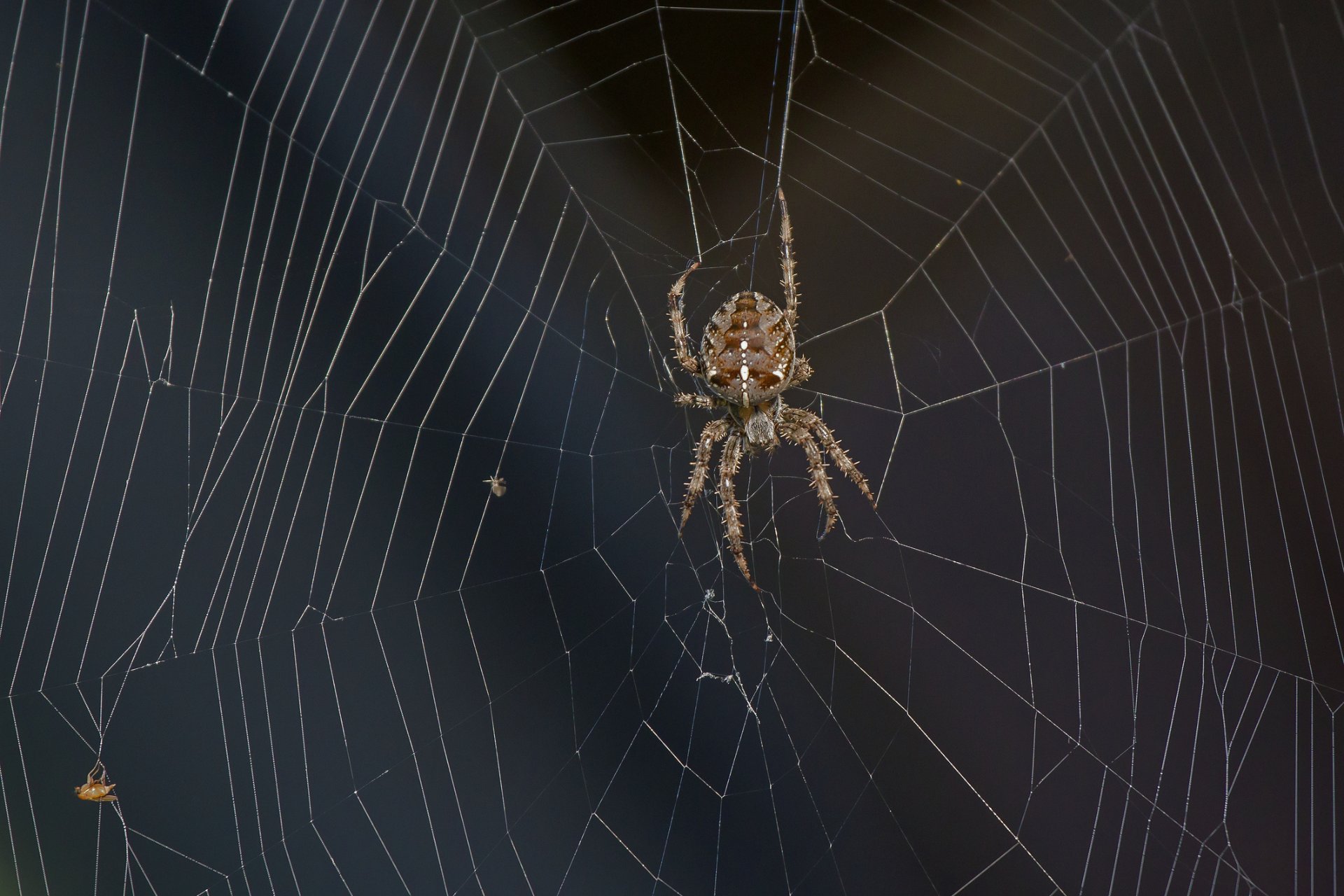
Central Florida hosts a diverse spider fauna, from beneficial web-building species that pose no threat to people to medically significant ones requiring professional attention. Most spiders encountered in and around Florida homes pose no threat to humans and actively reduce pest populations by preying on flies, mosquitoes, ants, and other insects. However, several species are medically significant, and the warm, humid conditions in Central Florida support spider populations year-round at higher densities than in temperate states. Common spiders in Central Florida include the Southern black widow (Latrodectus mactans) and brown widow (Latrodectus geometricus), both capable of causing systemic illness. The brown widow has become the more commonly encountered widow spider in urban environments across South and Central Florida. Wolf spiders (Hogna carolinensis and related species) are large, fast-moving ground hunters frequently encountered indoors, particularly during fall and after heavy rains. Orb-weaver spiders construct large, visible webs in outdoor vegetation and pose no threat to people but can become a nuisance around porch lights and entry points where insects concentrate.
Appearance
Black widow spiders are glossy black with a characteristic red hourglass marking on the underside of the abdomen. Brown widows are tan-to-brown with a similar hourglass in orange and a distinctive spiky egg sac — the spiked egg sac is the easiest field identification feature. Wolf spiders are large (up to 1½ inch body length), hairy, and brown-gray patterned; they do not build webs and are often mistaken for tarantulas. Orb-weavers are highly variable in color and pattern, identifiable by their large circular webs built at head height in outdoor vegetation. Jumping spiders are small and compact with large front-facing eyes; they pose no threat to people and are common on exterior walls and vegetation.
Behavior & Habits
Widow spiders prefer sheltered, low-traffic harborage: under decks, in utility boxes, in dense shrub bases, and in undisturbed corners of garages and sheds. They are not aggressive and bite only defensively when compressed against skin. Wolf spiders hunt actively at night and are commonly encountered indoors after entering through gaps in the foundation or doors. Most spider invasions increase when their prey insects are abundant indoors — spiders follow the food source. Orb-weavers rebuild webs nightly and are most visible in the early morning when webs are dew-coated.
Prevention
Reduce outdoor lighting that concentrates insects near entry points, which in turn attracts web-building spiders. Seal gaps around doors, windows, and utility penetrations. Remove wood piles, stored equipment, and dense vegetation immediately adjacent to the structure. Wear gloves when reaching into undisturbed areas — under deck railings, inside storage boxes, or into shrub bases — where widows commonly harbor. Shake out shoes and clothing left on garage floors before use.
Professional Treatment
Interior spider management focuses on reducing prey insects (a perimeter pest control program eliminates the food source that drives spiders indoors), applying targeted residual treatments to harborage areas, and removing webs mechanically. Exterior perimeter spray applications targeting eaves, foundation gaps, and outdoor lighting areas significantly reduce spider populations. GreenCore Environmental addresses spider activity as part of comprehensive perimeter treatment. Call (866) 816-BUGS to schedule a home inspection.
Why Professional Treatment Matters
Florida is home to several medically significant spider species, including the Southern Black Widow (Latrodectus mactans) and the Brown Widow (Latrodectus geometricus). Black widow venom contains alpha-latrotoxin, which attacks the nervous system and can cause severe systemic symptoms requiring medical treatment. Brown widows, though producing a less potent venom, have expanded their range aggressively across Central Florida and are now extremely common in exterior areas, outdoor furniture legs, and pool equipment enclosures. Consumer spider sprays kill spiders on contact but provide minimal residual control — spider exoskeletons allow them to walk over treated surfaces without absorbing much insecticide through contact. Spiders are controlled most effectively by reducing the insect populations they feed on (perimeter insect control) and by applying targeted residual treatment to web-building locations. Professional treatment addresses both the spider population and the harborage conditions that attract them.
GreenCore Covers Spiders
GreenCore's spider service includes a web removal pass of all accessible exterior eaves, doorways, outdoor lighting fixtures, and patio areas, followed by residual liquid treatment to web-building locations. The interior perimeter is treated with residual product at baseboards, window frames, and other web-attachment points. Because spiders follow their prey, GreenCore's general pest perimeter control is included with spider service — reducing the insect populations that attract spiders to the structure. Customers with confirmed black widow or brown widow activity receive targeted treatment of all harborage areas (box edges, pool equipment, outdoor furniture brackets) with follow-up inspection. Medically significant species locations are mapped and monitored between visits.
The GreenCore Guarantee
If you see pest activity between your scheduled service visits, call us. We will return and re-treat at absolutely no additional charge. This guarantee is not a marketing statement — it is built into every plan we offer. We stand behind our work because we are confident in our methods, and we believe that paying for pest control should mean your pest problem is actually solved.
Dealing with Spiders?
Contact GreenCore Environmental to schedule a free inspection. Our licensed technicians serve Central Florida homes and businesses throughout Orange, Osceola, Polk, and Seminole counties.