
Roof Rat
Rattus rattus
Identification, behavior, health risks, prevention, and professional treatment options for Central Florida residents.
Overview
The roof rat — also called the black rat or ship rat — is the dominant rat species in Florida and one of the most persistent structural pest problems for Central Florida homeowners. While Norway rats (the large burrowing rats more common in northern urban environments) are more widely known in pop culture, roof rats are the species overwhelmingly responsible for the attic infestations, gnawed wiring, and contaminated insulation that Florida homeowners actually encounter. Roof rats have been present in Florida for centuries, arriving with European settlers. They are ideally adapted to the state's environment: agile tree-climbers comfortable in the canopy of Florida's mature oaks and palms, capable of accessing homes through entry points as small as a half-dollar coin. The state's dense landscaping, abundance of fruit trees and palm trees, and mild winters provide year-round food and harborage for large outdoor populations. In neighborhoods with mature tree canopy — which describes most of established Central Florida — roof rat pressure is essentially constant. **Why Roof Rats Are a Serious Problem** Roof rats represent a significant structural and health threat when they establish inside a home. They gnaw continuously — not only because they are foraging, but because their incisors never stop growing and must be worn down through gnawing. They chew through electrical wiring, PVC water lines, ductwork, and insulation. Gnawed electrical wiring inside wall cavities and attic spaces is a well-documented fire hazard. Estimates from the National Fire Protection Association attribute a meaningful percentage of residential structure fires of unclear origin to rodent gnawing. Roof rat nesting in attic insulation also causes serious secondary damage. An established attic infestation soils and compresses insulation with urine and feces, degrading its R-value and creating an allergen load in the home's air circulation. Remediation — full insulation removal and replacement — typically costs several times what effective preventive pest control would have cost. Roof rats carry and transmit multiple diseases, including leptospirosis, rat bite fever, and murine typhus. Florida has seen documented cases of murine typhus in multiple counties — the disease is transmitted via fleas that roof rats host. Their contamination of kitchen surfaces, pantry goods, and food storage areas is a direct food safety risk. **Florida's Year-Round Roof Rat Problem** Florida's climate means roof rat populations do not decline seasonally. The abundance of citrus, avocado, fig, and other fruiting trees provides a reliable year-round food source sustaining large outdoor populations immediately adjacent to residential structures. Fall is peak season for interior infestations as populations seek warmer nesting sites heading into winter, but entry into homes occurs in all months. A breeding pair establishing in an attic in spring can produce a population of 40 or more by fall of the same year.
Appearance
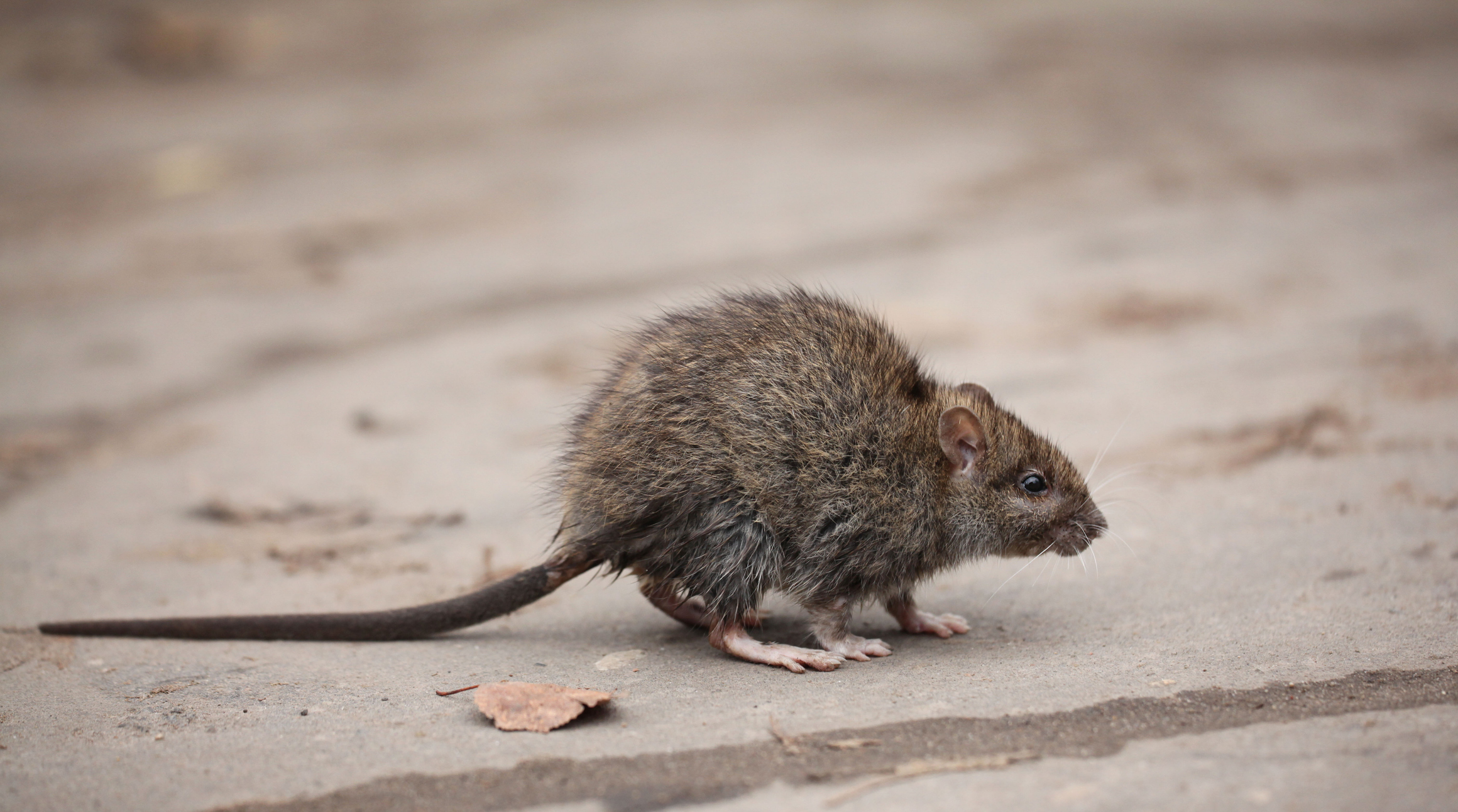
Roof rats are noticeably different in build from Norway rats. The body is slender and agile — 6 to 8 inches in body length — with a tail that is distinctly longer than the body (7 to 10 inches), used for balance during climbing. This tail-to-body length ratio is the most reliable field identification feature distinguishing roof rats from Norway rats, whose tails are shorter than body length. The coat is typically black to dark gray-brown on the back with a lighter gray to white underside, though coloration varies. The ears are large relative to body size and nearly hairless. The muzzle is pointed and the eyes are large and prominent — adaptations for the visually-oriented, arboreal lifestyle of this species. Adult roof rats weigh approximately 5 to 12 ounces. Droppings are approximately ½ inch long with pointed ends — distinguishable from Norway rat droppings (larger, blunt-ended) and mouse droppings (much smaller, about ¼ inch, pointed). Finding droppings in the attic, along the top of wall plates, or in the upper areas of a garage is characteristic of roof rats rather than other rodent species.
Behavior & Habits
Roof rats are outstanding climbers — arguably the most agile climbers among common rodent pest species. They routinely traverse utility wires, travel along overhanging tree branches, scale stucco and brick exterior walls, and jump distances of 4 feet horizontally and vertically. They access homes primarily from above: through overhanging tree branches that bridge to the roof, along utility lines, at roof-to-soffit junctions, at plumbing vent stack penetrations, and through deteriorated fascia or soffit material. Once inside, roof rats prefer to nest in attics, false ceilings, wall voids in upper stories, and areas behind cabinetry near ceilings. They are creatures of habit, using the same travel routes along wall tops and framing members nightly. Grease marks — dark smears from the oils in their coat — appear on frequently used travel paths along wooden members and at entry points. These marks are highly diagnostic evidence of established rat activity. Roof rats are neophobic — wary of new objects placed in their environment. This behavioral trait means traps and bait stations are frequently avoided for several days after placement before rats begin to investigate them. This is one of several reasons why DIY rodent control commonly achieves only partial, temporary results. Activity is primarily nocturnal with peak movement between midnight and 4 AM. Scratching, rolling, and rapid movement sounds in the attic after dark are the most common first indication of roof rat presence.
Prevention
Roof rat prevention is centered on physical exclusion — sealing access to the structure — combined with elimination of outdoor food and harborage sources. Trim back all tree branches to maintain a minimum 4-foot clearance between branches and the roofline. This is the single most impactful preventive action for most Central Florida homes, since roof rats enter primarily by bridging from tree canopy to roof. Trim the lower skirts of palm trees, which provide harborage and climbing access simultaneously. Inspect the full roofline for potential entry points: gaps at the junction of the roof deck and fascia board, open soffits, plumbing vent stack openings at roof penetrations, gaps at AC refrigerant line penetrations, deteriorated roof vent screens, and open crawl space vents. Roof rats can squeeze through a gap the size of a half-dollar coin. Seal identified gaps with galvanized hardware cloth, metal flashing, or appropriate sealants — materials that cannot be gnawed through. Remove fruit drop from beneath citrus, avocado, and other fruiting trees promptly. Store birdseed, pet food, and any outdoor food sources in sealed metal or heavy-duty plastic containers. Bring pet food indoors at night. Secure garbage containers with tight-fitting lids. Inside the home, seal gaps where pipes enter under sinks, around refrigerant line penetrations, and at any utility passage between the attic and the living area. Roof rats follow plumbing and wiring through these openings to move from the attic to lower floors.
Professional Treatment
Effective roof rat control requires three elements working together: population reduction via trapping or baiting, physical exclusion to seal entry points, and sanitation to remove food and harborage attractants. Addressing any single element without the others produces temporary results only. Snap traps are the preferred control tool in attic spaces — they provide a verifiable kill and do not risk secondary poisoning. They should be placed perpendicular to travel paths with the trigger positioned directly on the route, near the grease marks that identify where rats regularly travel. Rodenticide bait stations in tamper-resistant, lockable enclosures placed at the exterior perimeter intercept foraging roof rats before they enter the structure. The exclusion inspection is the most critical and most commonly underestimated component. It requires someone who can assess the full roofline and soffit system — including areas not easily visible from the ground — for all gaps a rat could use. Insulation remediation may be necessary following an established attic infestation. Contaminated insulation is a health hazard and, once compressed and soiled, provides little thermal benefit. This remediation is separate from pest control and is typically handled as a distinct project. GreenCore Environmental provides rodent control and exclusion inspections throughout Central Florida. If you're hearing attic activity at night or finding droppings, call (866) 816-BUGS to schedule an assessment.
Why Professional Treatment Matters
Roof rats (Rattus rattus) are excellent climbers that routinely enter Florida homes and businesses through gaps in rooflines, attic vents, and utility penetrations. Once inside an attic, a pair of roof rats can produce 40 or more offspring per year. Consumer snap traps and poison bait blocks can reduce visible populations, but without identifying and sealing all entry points, new rats from neighboring territories will continue entering the structure indefinitely. Roof rats contaminate attic insulation with urine and fecal matter and gnaw on electrical wiring — the leading cause of attic fires attributed to rodents. They also chew through A/C ductwork and PVC plumbing supply lines. Professional exclusion, not just population reduction, is the most lasting solution. Improperly placed consumer rodenticide can also result in secondary poisoning of raptors and other wildlife that prey on poisoned rats.
GreenCore Covers Roof Rat
GreenCore's roof rat service begins with a full exterior inspection to identify entry points including roofline gaps, soffit damage, utility penetrations, and tree branch contact. All identified entry points are sealed with gnaw-resistant materials as part of the exclusion component. Interior bait stations are placed in the attic and areas of confirmed activity. Snap traps are used near entry points during the active elimination phase. GreenCore monitors bait station activity between visits and adjusts placement based on activity patterns. Follow-up exclusion inspection at 30 days confirms no new entry points have been opened.
The GreenCore Guarantee
If you see pest activity between your scheduled service visits, call us. We will return and re-treat at absolutely no additional charge. This guarantee is not a marketing statement — it is built into every plan we offer. We stand behind our work because we are confident in our methods, and we believe that paying for pest control should mean your pest problem is actually solved.
Dealing with Roof Rat?
Contact GreenCore Environmental to schedule a free inspection. Our licensed technicians serve Central Florida homes and businesses throughout Orange, Osceola, Polk, and Seminole counties.