
Pantry Pests & Moths
Plodia interpunctella, Tribolium spp., Sitophilus spp.
Identification, behavior, health risks, prevention, and professional treatment options for Central Florida residents.
Overview
Pantry pests — the collective term for beetles and moths that infest stored dry food products — are among the most frustrating household pest problems because infestations are usually introduced in purchased food products before any pest management error occurs. The Indian meal moth (Plodia interpunctella) is the most common and widely recognized stored product pest in Florida homes. Common pantry beetles include the rice weevil (Sitophilus oryzae), sawtoothed grain beetle (Oryzaephilus surinamensis), and red flour beetle (Tribolium castaneum). All develop from egg through larva to adult inside food commodities — grains, cereal products, dried pasta, flour, rice, nuts, dried fruit, spices, bird seed, and pet food. In Florida's warm climate, development rates are faster than in colder states — what might take 6–8 weeks in a northern pantry may cycle in 3–4 weeks in a Central Florida summer — meaning infestations grow rapidly once introduced. Pantry pests spread from initially infested products to unaffected ones throughout the pantry, requiring thorough inspection rather than simply discarding the first infested item found.
Appearance
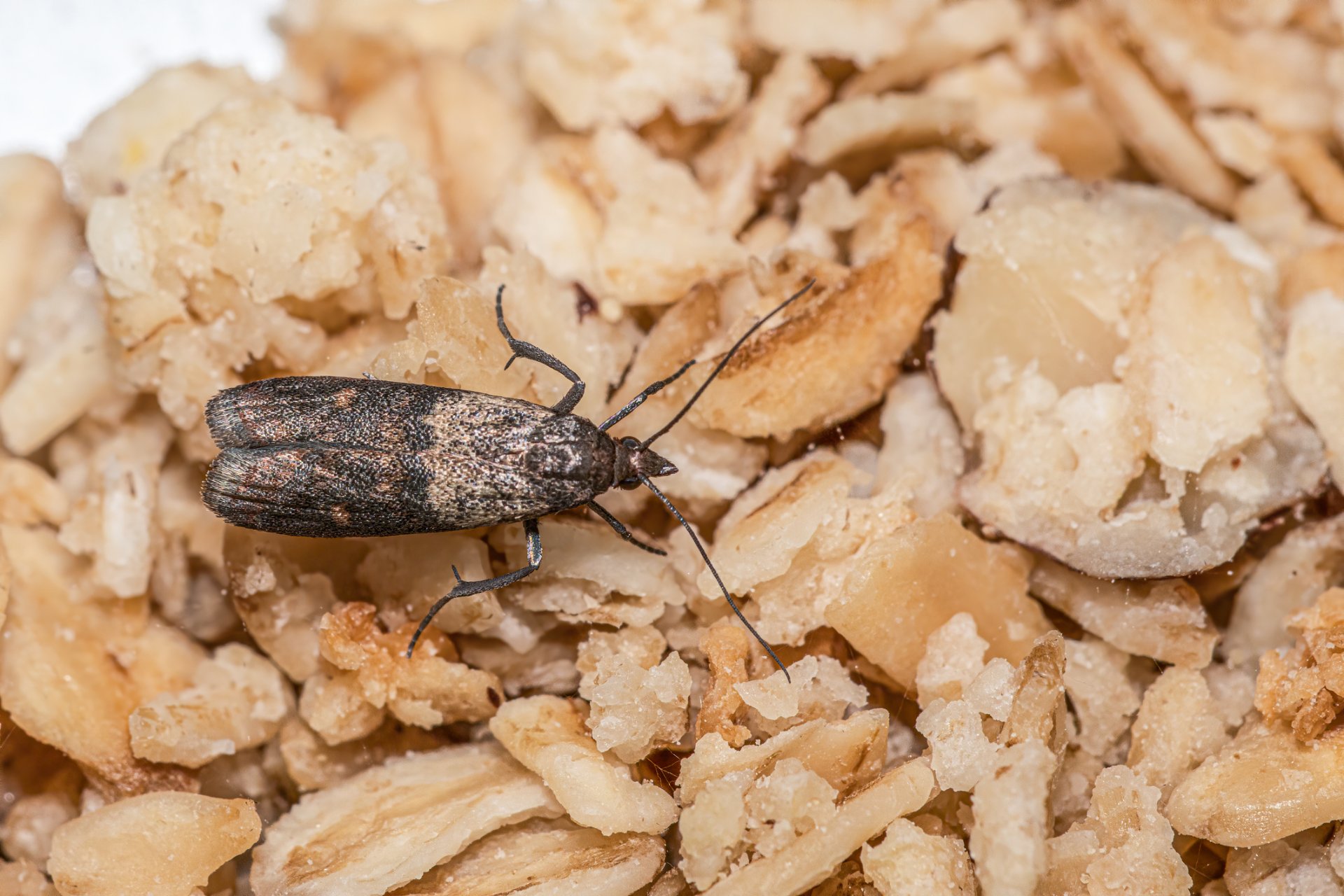
Indian meal moth adults have a wingspan of approximately 5/8 inch with distinctive two-toned wings: the outer two-thirds are reddish-brown with a copper sheen, and the inner third nearest the body is pale gray. This wing pattern is diagnostic. The larvae — small, off-white caterpillars — are the actual feeding stage and produce silken webbing in infested products. Rice and grain weevils are 1/8 inch, elongated, reddish-brown to black beetles with a characteristic elongated snout. Sawtoothed grain beetles are very small (1/10 inch), flat, and brown with distinctive saw-like projections along the thorax edges.
Behavior & Habits
Indian meal moth females lay 100–400 eggs directly on or near food material; larvae feed and contaminate products with frass, cast skins, and webbing. Larvae may wander from the original infested product before pupating, which is why they are found on ceilings, in cabinet crevices, and behind other products distant from the source. Weevils and grain beetles remain within the food commodity throughout their development. Pantry pest infestations are frequently discovered first when adult moths are seen flying in kitchens and pantries in the evening.
Prevention
Inspect dry food products before purchase, particularly at discount or bulk stores where products may have longer shelf residence. Transfer all susceptible products — flour, oats, rice, pasta, dried fruit, nuts, spices, and pet food — to sealed hard-sided containers (glass or heavy plastic with gasketed lids) immediately upon bringing them home. Keep pantry areas cool and dry. Regularly check bird seed and pet food, which are common introduction vehicles for pantry pests.
Professional Treatment
Pantry pest management begins with thorough inspection of all stored food products and removal of any infested material. All pantry contents must be inspected — larvae from one product commonly migrate to adjacent containers. After removal, cabinet interiors and crevices should be vacuumed and wiped clean to remove eggs and larvae. Pheromone traps for Indian meal moths are useful for monitoring and catching adults. Residual insecticide applied to cabinet interiors and pantry shelving is appropriate after all food has been removed. GreenCore Environmental can inspect and treat pantry pest infestations. Call (866) 816-BUGS.
Why Professional Treatment Matters
Pantry pests — including Indian meal moths, grain beetles, and weevils — are introduced into homes inside infested packaged food products purchased from the store. Because the initial infestation source is inside sealed packaging, infestations are often well-established before the first adult moth or beetle is seen. Consumer pantry pest traps attract and capture adult moths but do not address larvae that are already feeding inside additional packages throughout the pantry. Once pantry pests establish, they spread to neighboring packages quickly — larvae bore through cardboard and thin plastic packaging to reach new food sources. A thorough pantry cleanout is necessary, but professional inspection and targeted treatment of infested areas prevent re-establishment from larvae and pupae that have moved outside the pantry into wall voids and cabinet joints.
GreenCore Covers Pantry Pests & Moths
GreenCore's pantry pest service begins with a thorough pantry inspection to identify all infested products, which must be discarded by the customer before treatment. Following the cleanout, GreenCore treats cabinet interiors, shelf liners, and pantry wall-to-floor junctions with a targeted residual product. Pheromone monitoring traps are placed to track adult moth activity and confirm treatment effectiveness. GreenCore also inspects adjacent storage areas — garage pantry shelving, pet food storage, and secondary food cabinets — where infestations frequently spread undetected. Follow-up visit at 14 days confirms pheromone trap activity has ceased, indicating adult emergence from remaining pupae has ended.
The GreenCore Guarantee
If you see pest activity between your scheduled service visits, call us. We will return and re-treat at absolutely no additional charge. This guarantee is not a marketing statement — it is built into every plan we offer. We stand behind our work because we are confident in our methods, and we believe that paying for pest control should mean your pest problem is actually solved.
Dealing with Pantry Pests & Moths?
Contact GreenCore Environmental to schedule a free inspection. Our licensed technicians serve Central Florida homes and businesses throughout Orange, Osceola, Polk, and Seminole counties.