
Flies
Musca domestica / Drosophila spp.
Identification, behavior, health risks, prevention, and professional treatment options for Central Florida residents.
Overview
Several fly species are common structural and nuisance pests in Central Florida. House flies (Musca domestica) are mechanical vectors for dozens of pathogens that breed in decaying organic material, manure, and garbage. Fruit flies (Drosophila melanogaster and related species) are a nearly universal kitchen nuisance in Florida, breeding in overripe fruit, fermenting liquids, and the drain biofilm of kitchen and bar drains. Drain flies (Psychoda species) are small, moth-like flies that breed exclusively within the organic slime layer of clogged or slow-moving drains. Blow flies (Calliphoridae) are large, metallic-colored flies associated with animal remains and are occasionally indicators of a deceased animal in a wall cavity. In Central Florida, fly pressure is elevated year-round and peaks during the warm, wet season. Open garbage containers, outdoor dining areas, deteriorated door seals, and accumulated organic debris are the primary conditions supporting large fly populations near structures.
Appearance
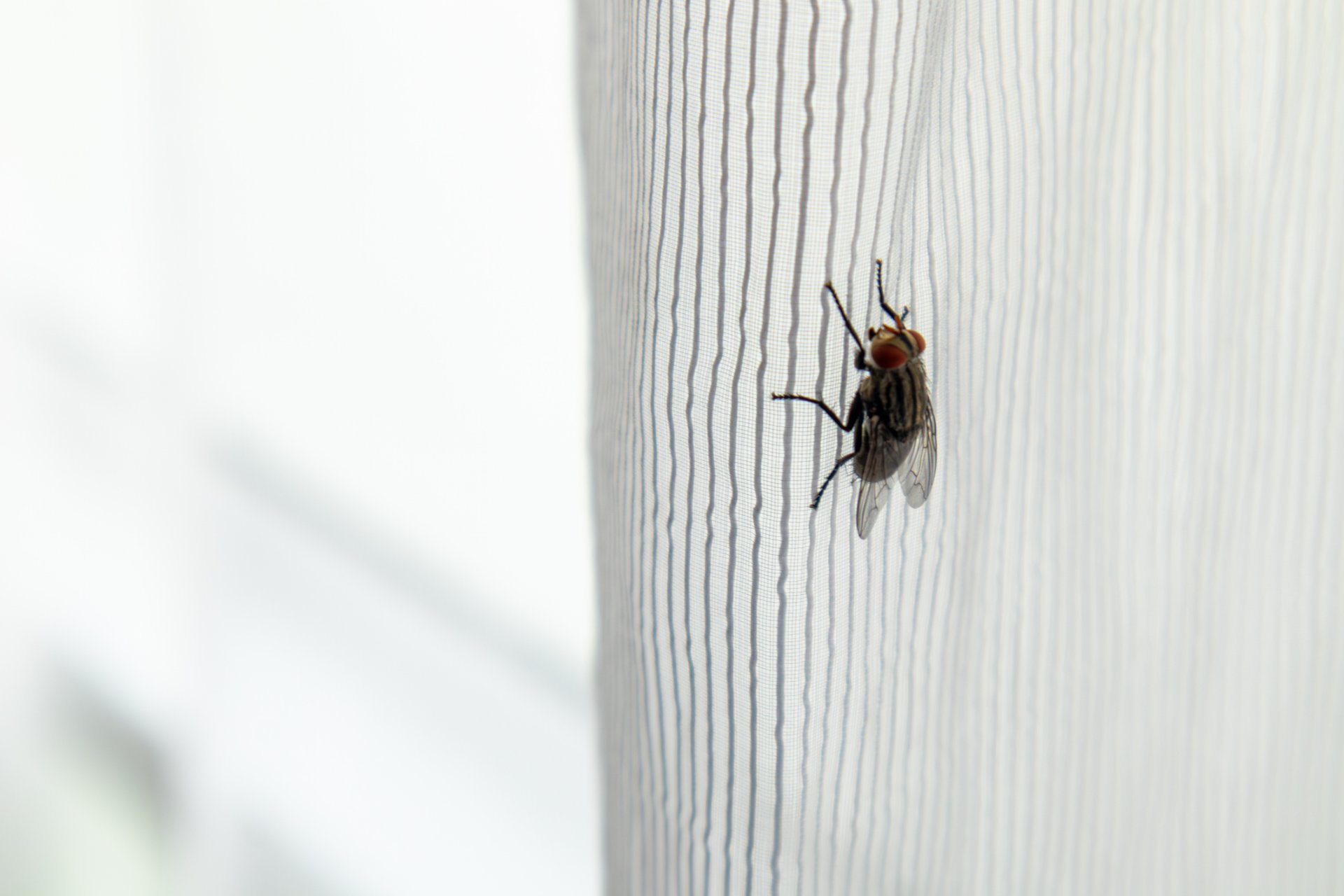
House flies are 3/16 to 1/4 inch, dull gray with four dark stripes on the thorax and large, red compound eyes. Fruit flies are tiny — 1/8 inch — with red eyes and a tan-to-brown body. Drain flies are 1/16 to 1/8 inch, moth-like, with densely haired wings held flat over the body; the hairy wings distinguish them from fungus gnats. Blow flies are noticeably larger (3/8 to 1/2 inch) with a distinctive metallic blue, green, or copper sheen.
Behavior & Habits
House flies breed in any sufficiently moist organic material — garbage, manure, compost, and food waste. A single uncovered garbage container left several days can produce thousands of adult flies. Flies cannot feed on solid food — they regurgitate digestive fluids onto food surfaces, dissolve solids, and ingest the resulting liquid, depositing pathogens at each contact. Fruit flies breed in the CO2 produced by fermenting fruit and yeast. Drain flies breed in the gelatinous biofilm inside drain pipes and do not respond to surface cleaning alone. Blow flies inside a structure typically indicate a deceased animal in a wall, ceiling, or sub-floor void.
Prevention
Keep all garbage and compost in tightly sealed, clean containers emptied at least twice weekly. Store fruit in the refrigerator or in sealed containers. Clean kitchen and bar drains monthly with enzymatic drain cleaner to eliminate biofilm. Maintain properly fitted, intact door and window screens. Address standing water and organic debris accumulation around the structure.
Professional Treatment
Fly management begins with source elimination — identifying and removing the breeding material — followed by species-appropriate treatment. Drain fly treatment requires enzymatic treatment of drain biofilm; adult spray treatments will not resolve drain fly infestations while the drain source persists. Fruit fly treatment requires eliminating all breeding sources including overripe produce, mop heads, garbage disposals, and fermenting spillage under appliances. GreenCore Environmental diagnoses fly species and provides targeted treatment. Call (866) 816-BUGS.
Why Professional Treatment Matters
Fly infestations in Florida homes and businesses are almost always driven by an active breeding site — decaying organic matter, drain buildup, garbage, or pet waste — and consumer fly sprays and sticky traps capture adults without eliminating the source. House flies can complete a full life cycle from egg to breeding adult in as few as 7 days in Florida's heat, meaning fly populations rebound continuously as long as the breeding site exists. Flies are mechanical vectors of bacterial pathogens: a single house fly can carry more than 200 different pathogens on its body and mouthparts. For food service operations, fly pressure creates direct food safety compliance risks. Professional fly management begins with breeding site identification and elimination, not surface sprays.
GreenCore Covers Flies
GreenCore's fly service starts with a breeding site inspection — identifying and treating floor drains with enzyme drain treatment to eliminate organic buildup, inspecting exterior dumpster areas, and locating any decaying organic material driving the population. Indoor fly light traps are recommended for food-handling areas. Exterior perimeter treatment is applied around entry points. For drain fly infestations specifically, GreenCore applies monthly drain treatment to maintain clean drain lines. For commercial accounts, GreenCore provides a documented fly monitoring program and written recommendation report to support food safety compliance. Adult fly reduction follows breeding site correction.
The GreenCore Guarantee
If you see pest activity between your scheduled service visits, call us. We will return and re-treat at absolutely no additional charge. This guarantee is not a marketing statement — it is built into every plan we offer. We stand behind our work because we are confident in our methods, and we believe that paying for pest control should mean your pest problem is actually solved.
Dealing with Flies?
Contact GreenCore Environmental to schedule a free inspection. Our licensed technicians serve Central Florida homes and businesses throughout Orange, Osceola, Polk, and Seminole counties.