
Fleas
Ctenocephalides felis
Identification, behavior, health risks, prevention, and professional treatment options for Central Florida residents.
Overview
The cat flea (Ctenocephalides felis) is by far the most common flea species in Florida, infesting not just domestic cats but also dogs, wildlife, and humans. Central Florida's warm, humid climate is nearly ideal for flea development — the cat flea does not require a cold period to complete its life cycle and breeds year-round under Florida conditions, making infestations more persistent and harder to resolve than in colder states. Flea pressure in Central Florida is elevated even in homes without pets, because wildlife hosts — opossums, raccoons, stray cats, and squirrels — continually re-introduce fleas to yard environments. Understanding the flea life cycle is critical to effective control. Adult fleas represent only about 5% of the total flea population in an infested environment. The remaining 95% consists of eggs, larvae, and pupae in the environment — in carpet fibers, pet bedding, beneath furniture, and in yard soil. This means treating only the animal host while ignoring the environment produces temporary results at best; the next generation of adults emerges from pupae in the carpet within days.
Appearance
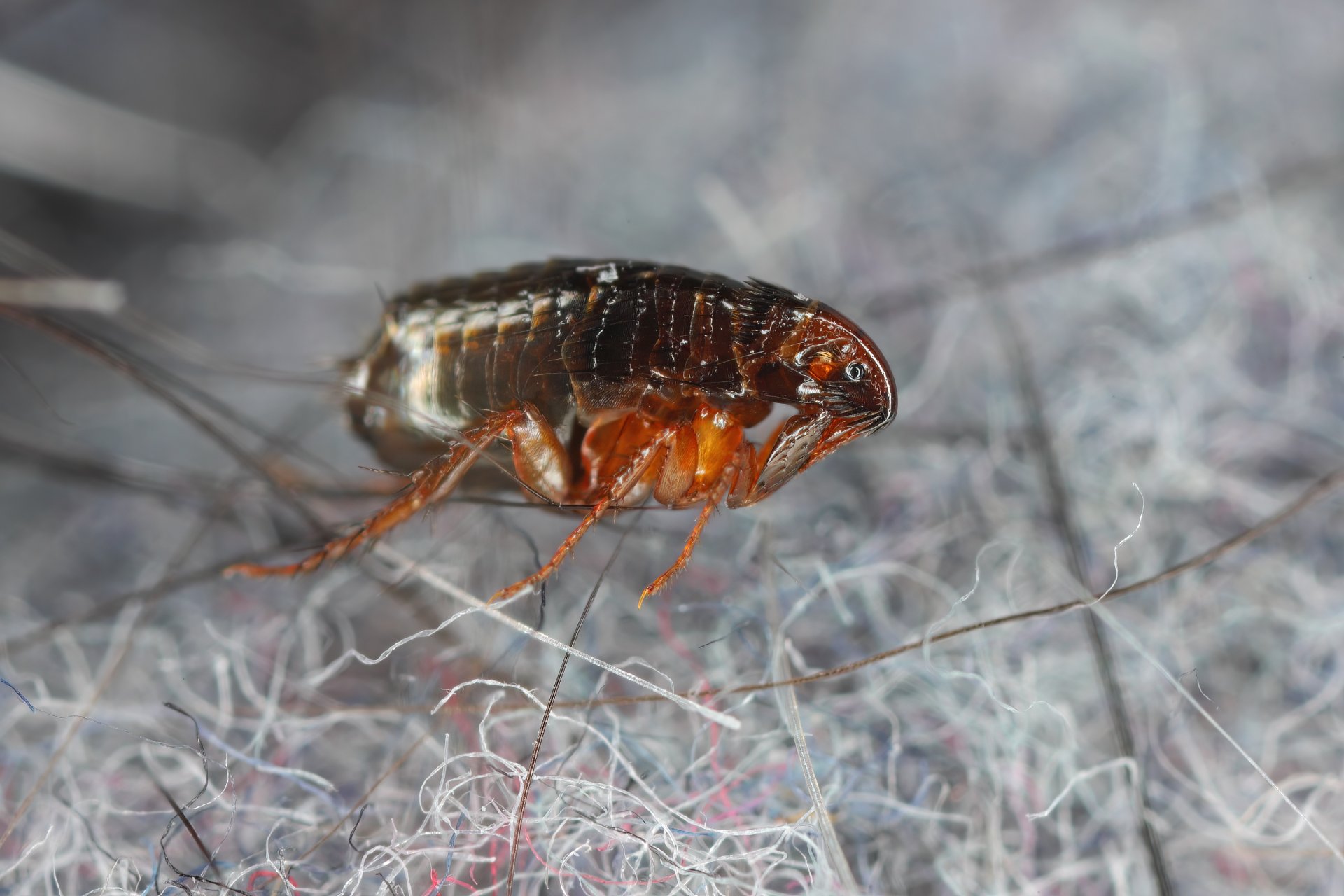
Adult cat fleas are tiny — approximately 1/16 inch (1.5–2 mm) — flat side-to-side (laterally compressed), wingless, and dark reddish-brown. They move very quickly by jumping. Flea dirt (fecal matter) is a diagnostic sign: small dark specks on pet bedding and carpet that dissolve to red-brown on a wet paper towel due to dried blood content. Flea eggs are white, oval, and approximately 0.5 mm — barely visible and fall freely from the host into the environment wherever the animal rests or sleeps.
Behavior & Habits
Adult fleas spend most of their time on the host animal, feeding on blood. Female fleas begin laying eggs within 48 hours of a first blood meal — producing 20–50 eggs per day. Eggs fall off the host and concentrate in pet bedding, sofas, and carpeted sleeping areas. Larvae hatch in 2–10 days, are blind, and feed on organic debris including flea dirt in the environment. Pupae are enclosed in a sticky cocoon that adheres to carpet fibers and is resistant to most insecticides; an adult flea can remain dormant in the pupal stage for weeks to months until vibration or heat from a passing host triggers emergence. This pupal dormancy is why homes can appear flea-free and then produce a new adult wave after being vacant.
Prevention
Keep pets on a veterinarian-recommended flea prevention protocol year-round — in Florida, seasonal prevention is insufficient. Vacuum carpets, pet bedding, and upholstered furniture weekly and dispose of vacuum bags outside immediately. Wash pet bedding in hot water weekly. Mow grass regularly and remove leaf litter from yard areas where pets rest. Wildlife-proof garbage containers to reduce wildlife hosts bringing fleas onto the property.
Professional Treatment
Effective flea management requires simultaneous treatment of the animal host (by or directed by a veterinarian), the interior environment, and the exterior yard. Interior treatment must include insect growth regulator (IGR) products that prevent larvae from maturing combined with adulticides for immediate adult kill. Multiple treatments spaced 2–3 weeks apart are typically required because pupae are insecticide-resistant until they emerge. GreenCore Environmental provides comprehensive flea treatment for homes and yards. Call (866) 816-BUGS.
Why Professional Treatment Matters
Florida's year-round warm climate means flea populations are active in all seasons, not just summer. Cat fleas (Ctenocephalides felis) — the species that infests both cats and dogs — have a four-stage life cycle in which only 5% of the population consists of visible adult fleas. The remaining 95% are eggs, larvae, and pupae in carpeting, bedding, and under furniture. Consumer flea sprays and foggers kill adult fleas and some larvae but do not penetrate pupal cocoons, which are resistant to insecticides. Pupae can remain dormant for months and hatch when vibration from foot traffic signals a host is present. A single flea treatment without addressing all life stages on both the pets and the environment fails for this reason. Professional flea treatment uses insect growth regulators (IGRs) in combination with adulticides to interrupt the full life cycle, including the cocoon stage.
GreenCore Covers Fleas
GreenCore's flea service treats both the indoor environment and the exterior yard simultaneously for maximum effectiveness. Indoor treatment uses a combination of adulticide and insect growth regulator (IGR) applied to all floor surfaces, under furniture, and in areas of confirmed pet resting. Exterior treatment targets the yard areas where pets spend time, particularly shaded sandy soil where flea larvae concentrate. Customers are advised to treat pets with veterinarian-prescribed flea prevention concurrently. A follow-up interior treatment 14 days later addresses newly hatched adult fleas from cocoons that were resistant to the first application. GreenCore guarantees re-treatment if flea activity persists after the two-visit protocol.
The GreenCore Guarantee
If you see pest activity between your scheduled service visits, call us. We will return and re-treat at absolutely no additional charge. This guarantee is not a marketing statement — it is built into every plan we offer. We stand behind our work because we are confident in our methods, and we believe that paying for pest control should mean your pest problem is actually solved.
Dealing with Fleas?
Contact GreenCore Environmental to schedule a free inspection. Our licensed technicians serve Central Florida homes and businesses throughout Orange, Osceola, Polk, and Seminole counties.