
Drywood Termite
Incisitermes minor / Cryptotermes brevis
Identification, behavior, health risks, prevention, and professional treatment options for Central Florida residents.
Overview
Drywood termites are the second major termite group threatening Florida properties — and in many ways they are harder to detect and more surprising to encounter than subterranean termites. Unlike subterranean termites, which live underground and require soil contact and moisture, drywood termites live entirely inside the wood they infest. They require no soil contact, no external moisture source, and leave few of the visible indicators that make subterranean termites identifiable. A drywood termite colony can exist inside a piece of furniture, a structural door frame, a window header, a roof rafter, or an attic beam — any dry, sound wood is a potential habitat. Florida's extensive use of wood framing in attic structures, combined with the abundance of wooden furniture and architectural woodwork, gives drywood termites many points of entry and many locations to feed undisturbed for years. Two species are most significant in Florida: Incisitermes minor (the Western Drywood Termite, which has established in South and Central Florida) and Cryptotermes brevis (the West Indian Drywood Termite), a highly invasive species now widespread throughout coastal and central Florida. Cryptotermes brevis is particularly problematic because it infests wood at lower moisture content than most other drywood species — making it capable of establishing in very dry attic framing where other termites would struggle to survive. **How Infestations Begin** Drywood termites establish new colonies through swarming. Reproductive swarmers emerge from an existing colony, fly, mate, and seal themselves into a small crack or joint in wood. The founding pair begins a colony that grows slowly — typical drywood colonies reach only a few hundred to a few thousand individuals after several years. However, a single building can harbor multiple separate drywood termite colonies simultaneously, and the cumulative damage over a decade can be extensive. Infestations frequently enter homes via infested wooden items: used furniture, antiques, framed artwork, wooden shipping crates, and goods purchased at estate sales or secondhand shops. Swarmers drawn to exterior lighting on warm Florida evenings can land on a structure and begin a new colony in exposed wood within hours. **The Detection Challenge** The most distinctive evidence of drywood termite activity is frass — dry, hard, hexagonal fecal pellets that termites push out of galleries through small "kick holes." These pellets accumulate in small piles beneath infested wood or on windowsills and are easily mistaken for sawdust, fine sand, or construction grit. The absence of visible frass does not confirm absence of termites — kick holes may be positioned where frass falls in inconspicuous locations.
Appearance
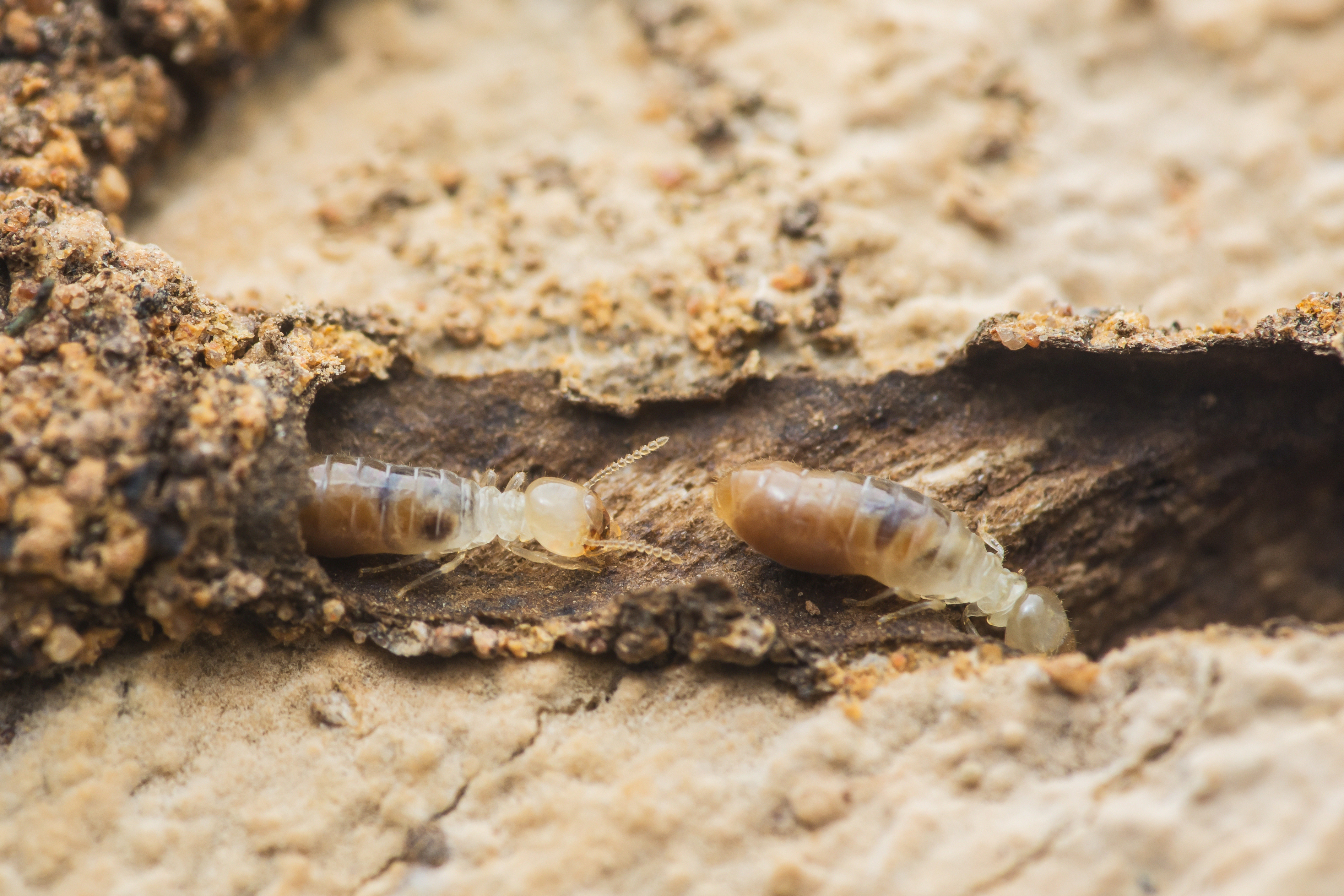
Drywood termite swarmers are ⅜ to ½ inch in length, brownish to reddish-brown with grayish wings. Like all termite swarmers, they have two pairs of equal-length wings that extend well past the abdomen. The wings are shed soon after the termites land, and discarded wings near windowsills or on floors are frequently the first indicator that a swarming event has occurred. Workers are creamy white, soft-bodied, and similar in appearance to subterranean termite workers. Soldiers have large dark heads and robust mandibles. Cryptotermes species soldiers have a distinctive rounded, plug-shaped head used to physically block gallery entrances — a unique feature that helps pest professionals distinguish drywood from subterranean species. The most practical identification tool for homeowners is drywood termite frass: hard, dry, hexagonally-faceted pellets approximately the size of fine gravel. Unlike subterranean termite frass — which has a sandy, soil-based appearance — drywood frass is hard, dry, and has a clearly geometric cross-section visible under magnification. Frass color ranges from cream to dark brown depending on the wood species being consumed.
Behavior & Habits
Drywood termite colonies grow slowly. A newly established colony typically produces its first swarmers only after four or more years, and may contain just a few hundred individuals at that stage. This slow growth is a primary reason why infestations so commonly go undetected for many years — early damage is minor and frass production is low. Workers actively avoid light and open air, remaining sealed within galleries at all times. They excavate chambers across the wood grain — unlike subterranean termites, which typically follow the grain — producing smooth-walled chambers connected by clean tunnels. The galleries are kept meticulously clean of frass, which is pushed through kick holes to be expelled from the wood. Drywood termites extract moisture directly from the wood they consume and from metabolic digestion byproducts, allowing them to survive in wood that would be too dry for subterranean termites. Swarming in Florida occurs from May through August, typically in the evening during warm, humid weather, often following rain. Swarmers are strongly attracted to light and are frequently seen at windows, around exterior light fixtures, and near porch lighting during swarming season.
Prevention
Controlling what enters your home is the primary prevention strategy for drywood termites. Carefully inspect all used or secondhand wood furniture before purchase — look for small circular kick holes (approximately 1mm in diameter) in the wood surface, hexagonal frass granules in joints and crevices, and hollow-sounding areas when tapped. Apply the same scrutiny to antiques, wooden frames, and architectural salvage pieces. Seal cracks and exposed wood joints on the exterior of the structure. Drywood termite swarmers enter wood through natural cracks and end-grain openings. Painted, caulked, and sealed wood surfaces present fewer entry opportunities. Pay particular attention to wood fascia boards, eave overhangs, exposed rafters in open-beam construction, and window and door frames. Reduce exterior lighting during swarming season (May through August) or switch to yellow sodium vapor or LED wavelengths that attract fewer flying insects. Swarmers drawn to lights land on nearby wood surfaces — minimizing attraction to the structure reduces the number of new colony establishment events. Inspect attic framing annually. Drywood termites are common in Florida attics and infestations there often go undetected for years. Probe exposed rafters and sheathing for soft spots, and look for frass accumulations on the attic floor or insulation below exposed wood members.
Professional Treatment
Drywood termite treatment depends on the extent and location of the infestation. Localized infestations in accessible wood can be treated through targeted injection of termiticide directly into galleries via existing kick holes or small drilled access points. This approach is appropriate when the infestation is clearly confined to a specific piece of furniture, a window frame, or a well-defined structural member. For extensive infestations or those in inaccessible areas — attic framing, wall cavities, structural members inside finished walls — whole-structure fumigation (tent fumigation) is the only treatment method that reliably reaches all infested wood simultaneously. Fumigation requires occupants to vacate for approximately 72 hours and, when done correctly, is designed to control the drywood termite colonies present at the time of treatment. Fumigation provides no residual protection — a new infestation can begin the following swarming season. Annual inspections and preventive sealing of exposed wood surfaces are the best long-term tools after treatment. If you're finding frass piles, discarded wings, or soft spots in wood around your Central Florida home, contact GreenCore Environmental at (866) 816-BUGS for a drywood termite inspection.
Why Professional Treatment Matters
Drywood termites (Incisitermes snyderi and Cryptotermes species in Florida) are uniquely difficult to treat because they do not require contact with soil — they live entirely inside dry wood, gaining moisture from the cellulose they consume. This means soil termiticide barriers, which are effective against subterranean termites, provide no protection against drywood species. Consumer products cannot penetrate sealed wood to reach the colony chambers inside. Drywood termite infestations are identified by small fecal pellets (frass) pushed out of kick-out holes in wood surfaces. By the time frass is visible, the colony has been established for months and has already caused structural damage inside the wood member. Only licensed professionals have access to the fumigation and spot-treatment products and equipment required to eliminate these colonies.
GreenCore Covers Drywood Termite
GreenCore technicians inspect for drywood termite activity by probing wood members, examining for frass, and using moisture meters to identify structurally compromised wood. Localized infestations are treated with foam or liquid injection directly into gallery channels through drilled access points, eliminating the colony at its source without the disruption of whole-structure fumigation. For widespread infestations involving multiple wood members, GreenCore coordinates full-structure fumigation with a licensed fumigation partner. A follow-up inspection at 30 days confirms elimination and identifies any secondary infestation sites.
The GreenCore Guarantee
If you see pest activity between your scheduled service visits, call us. We will return and re-treat at absolutely no additional charge. This guarantee is not a marketing statement — it is built into every plan we offer. We stand behind our work because we are confident in our methods, and we believe that paying for pest control should mean your pest problem is actually solved.
Dealing with Drywood Termite?
Contact GreenCore Environmental to schedule a free inspection. Our licensed technicians serve Central Florida homes and businesses throughout Orange, Osceola, Polk, and Seminole counties.