
Bed Bugs
Cimex lectularius
Identification, behavior, health risks, prevention, and professional treatment options for Central Florida residents.
Overview
Bed bugs (Cimex lectularius) have re-emerged as a significant pest across the United States over the past two decades. Central Florida — as a major tourism destination with high hotel, short-term rental, and transient housing turnover — has above-average bed bug pressure relative to non-tourism markets. Bed bugs are strictly hematophagous (blood-feeding) insects that do not infest food, cause structural damage, or transmit known pathogens, but infestations cause significant distress, allergic skin reactions, sleep disruption, and in severe or untreated cases, anemia from repeated blood loss. Bed bugs are exclusively transported by humans through luggage, furniture, clothing, and used items — not by wildlife, pets, or outdoor conditions. Every infestation traces to a human-mediated introduction event. The most common introduction scenarios in Central Florida are hotel or vacation rental stays, secondhand furniture, and contact with infested residences. Their cryptic behavior and ability to persist for months without feeding make early detection challenging.
Appearance
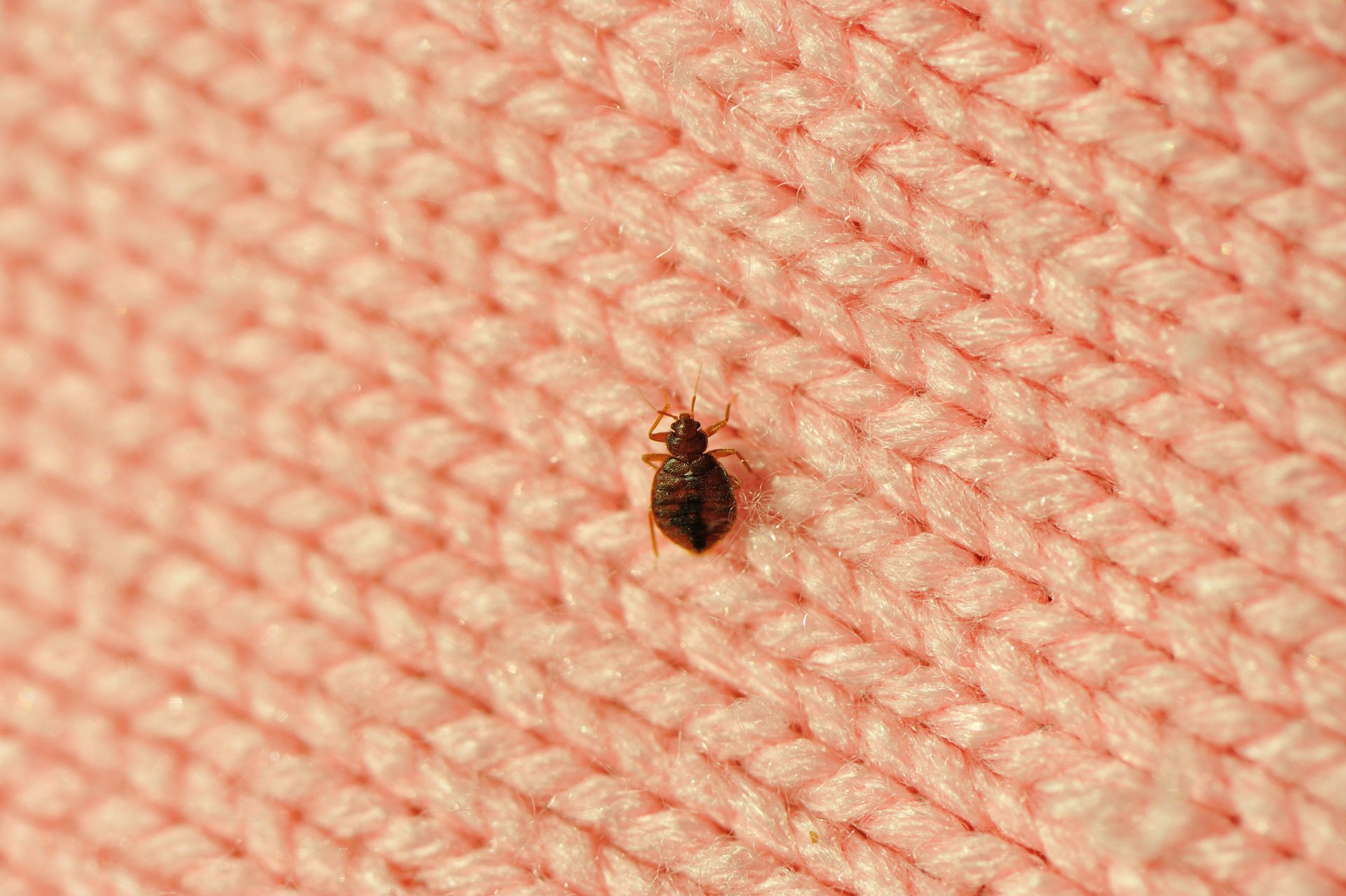
Adult bed bugs are 3/16 to 1/4 inch long, oval-shaped, flat when unfed (resembling an apple seed), and reddish-brown. After a blood meal, the body becomes elongated, darker, and distinctly swollen. They are wingless and cannot jump or fly. Nymphs pass through five instars; early instars are pale yellow and very small (approximately 1 mm). Eggs are white, 1 mm, and laid in clusters in crack-and-crevice harborage near the sleeping area. Bed bug fecal spots appear as small dark stains on mattress seams, headboards, and baseboards — on a damp cloth, the stain smears dark brownish-red.
Behavior & Habits
Bed bugs are obligate parasites that feed exclusively on blood, emerging at night when the host is stationary. They are attracted to the CO2 exhaled by sleeping humans. A single feeding requires 5–10 minutes; afterward bugs return to harborage within the mattress, box spring, headboard, baseboards, outlet covers, and other tight spaces within a few feet of the sleeping area. At room temperature, an adult bed bug can survive 3–6 months without a blood meal. Populations spread within a structure by hitchhiking on items moved between rooms.
Prevention
Inspect hotel rooms before unpacking: check mattress seams, the headboard, and nightstand crevices for live bugs or fecal staining. Keep luggage on hard surfaces or in the bathroom rather than on floors or beds. After travel, launder clothing immediately on the highest appropriate heat setting. Inspect secondhand furniture thoroughly before bringing it into the home. Mattress and box spring encasements seal harborage and make future inspections easier.
Professional Treatment
Bed bug management is one of the most technically demanding residential pest treatments. Effective options include heat treatment (raising rooms to 120°F+ for 60–90 minutes), chemical treatment using residual insecticides in harborage areas, or a combination of both. A single treatment is rarely sufficient — follow-up inspections and retreatments are standard. DIY bed bug treatment has a very high failure rate due to cryptic harborage, chemical resistance in some populations, and the precision required. GreenCore Environmental provides professional bed bug treatment and follow-up inspection. Call (866) 816-BUGS for an immediate assessment.
Why Professional Treatment Matters
Bed bugs (Cimex lectularius) are among the most difficult pest infestations to eliminate without professional treatment. They hide in mattress seams, box spring frames, wall outlets, picture frames, and behind baseboards — locations that consumer sprays and foggers cannot reach. Bed bugs have widespread resistance to pyrethroid insecticides (the active ingredient in most consumer products), meaning spraying infested areas may disperse them into new rooms without killing them. A single missed female bed bug can re-establish a full infestation within 6–8 weeks. Consumer heat guns and steam wands do not generate or maintain the sustained 120°F temperatures required to kill bed bugs in all life stages in thick mattresses and furniture. Professional heat treatment or a combination of professional pesticide application and heat is required to achieve full elimination. Delaying treatment allows the infestation to spread to additional rooms and units.
GreenCore Covers Bed Bugs
GreenCore offers professional bed bug treatment using a combination of targeted residual insecticide application and mattress/box spring encasement recommendations. Technicians treat all confirmed harborage sites — mattress seams, bed frames, headboards, baseboards, electrical outlets, and furniture joints — using EPA-registered products appropriate for residential use. A second treatment visit is scheduled 10–14 days later to treat any newly hatched nymphs that were in the egg stage during the initial treatment. GreenCore also provides a pre-treatment preparation checklist to maximize treatment effectiveness. The GreenCore Guarantee covers re-treatment if bed bug activity is confirmed between scheduled visits.
The GreenCore Guarantee
If you see pest activity between your scheduled service visits, call us. We will return and re-treat at absolutely no additional charge. This guarantee is not a marketing statement — it is built into every plan we offer. We stand behind our work because we are confident in our methods, and we believe that paying for pest control should mean your pest problem is actually solved.
Dealing with Bed Bugs?
Contact GreenCore Environmental to schedule a free inspection. Our licensed technicians serve Central Florida homes and businesses throughout Orange, Osceola, Polk, and Seminole counties.