
American Cockroach
Periplaneta americana
Identification, behavior, health risks, prevention, and professional treatment options for Central Florida residents.
Overview
The American cockroach — called the "palmetto bug" throughout Florida — is the largest cockroach species routinely found in homes and businesses, and one of the most common household pests in Central Florida. Despite its name, this species is believed to have originated in Africa and arrived in North America via ship trade centuries ago. Today it is deeply embedded in Florida's urban ecology, thriving in the warm, humid conditions that make the state a year-round habitat for cockroach populations of a scale rarely seen in colder climates. American cockroaches live primarily outdoors. Their preferred habitats include storm drain systems, sewer infrastructure, water meter boxes, palm tree skirts, moist mulch beds, compost piles, and dense landscaping — all common features of Central Florida properties. From these outdoor populations, they regularly migrate indoors through gaps in foundations, plumbing penetrations, weep holes, garage doors, and utility openings. A single storm drain in a typical Florida neighborhood can harbor hundreds of individuals, meaning the source population for indoor invasions is always close by and always active. Once inside, they favor dark, moist areas: beneath and behind appliances, inside wall voids near plumbing, under kitchen and bathroom cabinetry, in garages and utility rooms. They are generalist feeders and will consume food scraps, grease, paper, adhesives, and virtually any organic material. **Health and Property Concerns** American cockroaches pose documented health risks. They travel through sewers, garbage, and organic debris before walking across food preparation surfaces and stored food, mechanically transferring bacteria including Salmonella, E. coli, and Staphylococcus. Their shed exoskeletons and fecal droppings contain allergen proteins that are a known trigger for asthma attacks — research has consistently linked cockroach allergen exposure to asthma development and increased severity, particularly in children. Homes with active infestations have measurably elevated allergen levels in household dust. **Why Florida Is Particularly Affected** In northern states, outdoor cockroach populations decline sharply in winter. Florida's climate provides no such relief. The migration pressure on homes never stops — outdoor populations remain active and reproductive twelve months of the year. The abundance of mature landscaping, palm trees, municipal storm infrastructure, and year-round irrigation creates large outdoor populations immediately adjacent to homes. Florida homeowners who spot a single American cockroach indoors are almost certainly seeing one of a larger population in and around the property.
Appearance
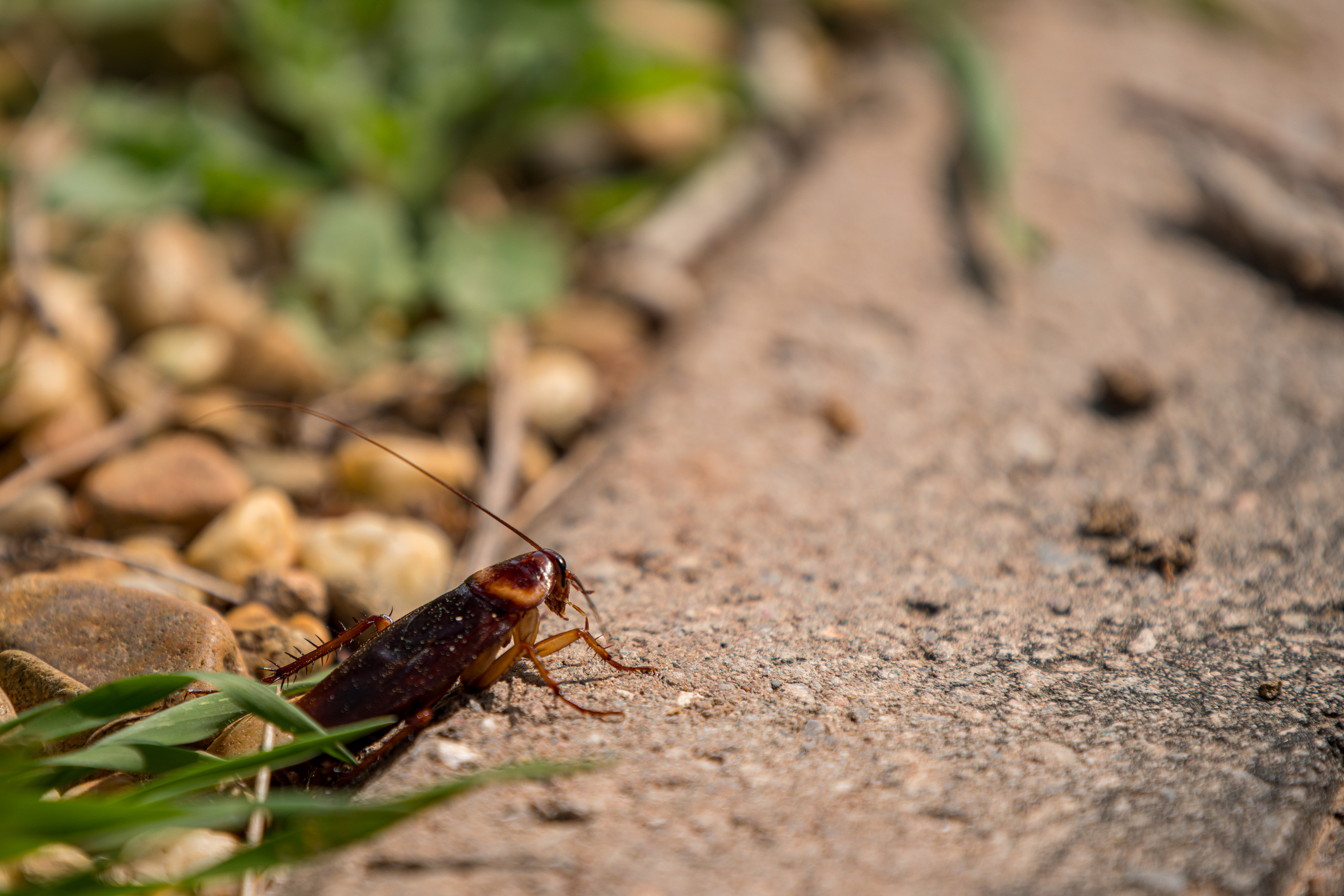
The American cockroach is Florida's largest common cockroach, typically measuring 1.5 to 2 inches in body length, with some individuals reaching up to 2.5 inches. The body is reddish-brown to mahogany, with a distinctive yellowish or cream-colored figure-eight pattern on the pronotum — the shield-like plate directly behind the head. This pronotum marking is a reliable identification feature that distinguishes it from Florida's other large cockroach species. Both males and females are fully winged. Males' wings extend slightly past the tip of the abdomen; females' wings align roughly flush with the abdomen. Despite being capable of flight, American cockroaches rarely fly under normal conditions, though sightings of flying individuals do occur during very high-heat periods in summer. The antennae are long and threadlike, often equaling or exceeding body length. Nymphs go through 10 to 13 molts before reaching adulthood and are darker in color with no fully developed wings. A single female produces approximately 150 offspring over her lifetime via egg cases (oothecae), each containing 14 to 16 eggs.
Behavior & Habits
American cockroaches are primarily nocturnal, becoming active after dark to forage for food and water. When seen during daylight hours, it typically indicates a large population that has exceeded its available harborage space. They move quickly and are highly responsive to disturbance, scattering rapidly when light is introduced. Outdoors in Florida, they congregate in areas combining moisture, decaying organic matter, and shelter: under mulch beds, in tree cavities, inside storm drain systems, beneath ground-level debris piles, and in the root zones of mature trees. They are particularly common in Florida's municipal sewer and storm drain infrastructure, which runs beneath every neighborhood. They migrate indoors through foundation gaps, plumbing penetrations, under garage doors, and through weep holes in brick veneer exteriors. Inside, they establish harborage in the warmest, most humid zones of the structure — under the refrigerator, behind the dishwasher, in wall voids adjacent to plumbing, and in utility rooms. They produce aggregation pheromones that draw other cockroaches to shared harborage sites, which is why infestations tend to concentrate in specific zones of a home rather than being distributed evenly. American cockroaches are highly mobile, traveling 100 feet or more from a harborage site in a single night's foraging. This mobility, combined with their routine movement between sewer infrastructure and indoor environments, makes them effective mechanical vectors for bacterial pathogens.
Prevention
Reducing American cockroach pressure begins outside. Keep mulch beds thin — no more than 2 to 3 inches deep — and maintain at least a 12-inch dry zone between mulch and the foundation. Dense, moist mulch directly against the foundation is prime American cockroach harborage. Remove leaf litter, wood debris, and organic material from the perimeter regularly. Check and seal entry points methodically: gaps around plumbing penetrations where pipes enter the foundation, utility line openings, weep holes in brick veneers, gaps beneath garage doors, and any visible foundation cracks. Tight-fitting door sweeps on all exterior doors — especially garage doors — make a measurable difference in reducing nighttime migrations indoors. Eliminate exterior moisture sources: dripping faucets, irrigation heads that overspray against the foundation, standing water in plant saucers, and drainage grades that collect water near the structure. Fix leaking pipes and plumbing inside the home promptly. Cockroaches are strongly attracted to moisture, and wet areas near entry points invite large populations to congregate close to the structure. Store garbage in sealed containers away from entry doors. Bring pet food indoors at dusk — outdoor feeding stations are reliable cockroach attractants. These steps reduce pressure, but Florida homeowners should understand that because of the sheer size of outdoor populations in the state's landscaping and utility infrastructure, professional exterior treatment is the most practical long-term control approach.
Professional Treatment
American cockroaches in Florida respond well to a combination of exterior perimeter insecticide treatment and targeted interior baiting. Professional-grade residual treatments applied as a foundation band and around identified entry points create a chemical barrier that cockroaches contact during nighttime foraging. Gel bait placed under appliances, in drains, and at plumbing penetrations addresses cockroaches already inside the structure. Unlike consumer spray products, professional applications are formulated for residual effectiveness over weeks to months and are applied based on cockroach movement patterns rather than broadcast across surfaces. Quarterly retreatment maintains the perimeter barrier as it breaks down under Florida's rain and UV exposure. If you're finding American cockroaches indoors in Central Florida, a professional inspection can identify entry points and harborage areas. GreenCore Environmental provides perimeter pest control throughout Orange, Osceola, Polk, and Seminole counties — call (866) 816-BUGS to schedule a free inspection.
Why Professional Treatment Matters
American cockroaches (Periplaneta americana) are one of the fastest-reproducing cockroach species in Florida, and consumer products almost never eliminate an established infestation. Store-bought baits and sprays address the individuals you can see — but American cockroaches harborage in floor drains, sewer lines, utility chases, and wall voids where consumer products cannot penetrate. A single missed harborage site allows the population to rebound within weeks. Florida's warm, humid climate means American cockroaches are active year-round, not seasonally. Without a recurring professional program, populations re-establish from neighboring structures, landscaping, and sewer entry points. Professional treatment targets the harboring sites, not just the foraging insects, and a monitoring program catches re-entry before populations grow large enough to become visible.
GreenCore Covers American Cockroach
GreenCore's technicians begin every American cockroach treatment with a harborage inspection — examining floor drains, utility penetrations, exterior slab perimeters, and moisture-prone areas where these large roaches concentrate. Treatment combines a perimeter liquid barrier to block re-entry with targeted gel bait placed in harborage voids. For structures with active sewer-connection entry, drain treatments are applied to eliminate the indoor colony at its source. Follow-up visits confirm harborage elimination and re-treat any new entry points identified. American cockroach coverage is included in GreenCore's General Pest Control and applicable protection plans.
The GreenCore Guarantee
If you see pest activity between your scheduled service visits, call us. We will return and re-treat at absolutely no additional charge. This guarantee is not a marketing statement — it is built into every plan we offer. We stand behind our work because we are confident in our methods, and we believe that paying for pest control should mean your pest problem is actually solved.
Dealing with American Cockroach?
Contact GreenCore Environmental to schedule a free inspection. Our licensed technicians serve Central Florida homes and businesses throughout Orange, Osceola, Polk, and Seminole counties.